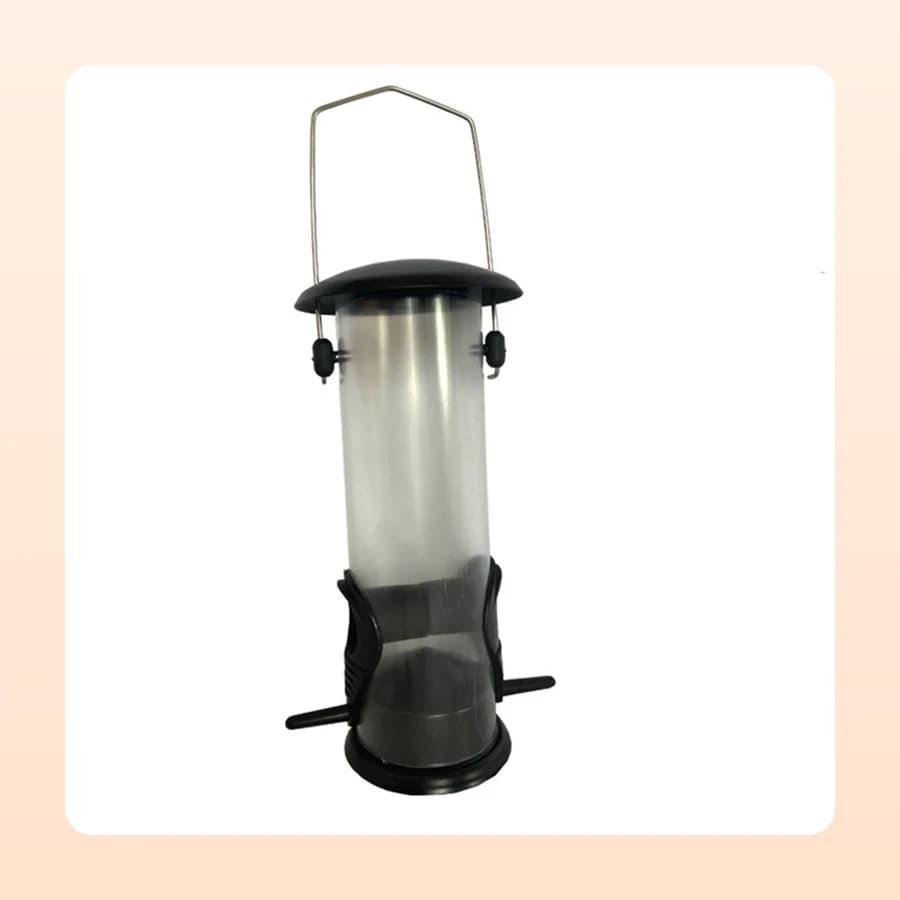
Clear, so you can see it is empty from across the room.
The reserve sits above the cup and refills it as the bird drinks, so the level stays constant and less debris reaches the water than in an open dish.
£8.99
Taxes calculated at checkout
220 ml reservoir, a couple of days for a budgie
Clips onto standard cage bars, inside or out
Clear body shows the level without opening the cage
Small trough, so less gets fouled
7.5 x 3.2 x 13.4 cm
1
Free shipping over £45
Free 30 day returns
Secure checkout
Why you'll love it
Made for happy, healthy pets
An open dish is a bath, a toilet and a spill
Birds stand in open water, drop food in it and knock it over. A bottle keeps the reservoir sealed and exposes only a small drinking area, which is why the water stays usable longer.
Seeing the level is the safety feature
A bird without water is in trouble in hours, not days. Clear plastic means a glance from the doorway tells you, rather than having to open the cage and look in a dish.
Still change it daily
Sealed does not mean sterile. Biofilm builds in the trough and the neck within a day or two, and stale water is a real cause of gut trouble in caged birds.
Good fit if
Keeping the drinking level steady through the day
Reducing how much husk and down lands in the water
Checking the level without opening the cage
Cages where an open dish gets bathed in
Look elsewhere if
Your bird prefers to bathe in its drinking water
You want something you can scrub in one piece
You would rather offer water in an open dish
Why a reserve helps
An open dish loses water to evaporation, to bathing and to being knocked, so the level a bird finds in the evening can be very different from what you put in that morning. A gravity drinker keeps the drinking surface topped up from a reserve above it, so the level is consistent all day.
It also reduces contamination. Only the small cup is exposed, so there is less surface for husks, down and dropped seed to land on, and the reserve above stays clean. That does not remove the need for daily changes, but it means the water is cleaner between them.
Biofilm is the real problem
The slippery film that develops on the inside of a water container is a bacterial biofilm, and it forms faster than most owners expect once a room is warm. It is the main hygiene issue with any bird drinker, and it is not removed by rinsing, which simply moves it around.
A bottle brush is what removes it. That is the practical drawback of a gravity design: the reserve is a shape you cannot reach into with a cloth, so a brush that fits the neck is essential rather than optional. Change the water daily and twice a day in warm weather.
Position and bathing
Mount it at a height the bird reaches easily from a perch without stretching, and in a spot it does not have to squeeze past a toy to get to. In a cage with more than one bird, two water points at opposite ends stops a dominant bird controlling the only source.
Birds that like to bathe will try it in a drinker if there is nowhere better, which fouls the water quickly. Offering a proper shallow bath in the morning gives them the option they actually want and keeps the drinking water clean, and most birds use both correctly once both are available.
In the box
Everything you need
1 gravity drinker with cage clip
How it works
Simple, from basket to doorstep
1
Browse
Shop by pet or category to find exactly what your cat or dog needs, no wading through thousands of listings.
2
Order
Check out securely with card, PayPal or one tap Apple Pay & Google Pay. Free delivery over £45.
3
Delivered
Fast, tracked dispatch straight to your door, and a happier pet before you know it.
The details
Specifications
Capacity
220 ml
Size
7.5 x 3.2 x 13.4 cm
Weight
57 g
Material
Clear plastic
Fitting
Clips to standard cage bars
Daily and weekly
Change the water daily, and twice on a warm day. Refilling without emptying leaves the film in place and simply dilutes it, so tip the old water out completely each time rather than topping up what is there.
Scrub the reserve and the cup with a bottle brush at least weekly, using hot water and nothing else, or a bird safe cleaner rinsed very thoroughly. If any part has gone cloudy or you can feel a slippery surface with a fingertip, it needed doing before you got to it.
Loved by real pet parents
4.5· 13 reviews
Pair of budgies
No more soaked cage floor
The open dish was on the floor by lunchtime every single day and the paper underneath was a swamp. This clips to the bars and the 220 ml stays in the bottle until she actually drinks it. A fortnight in and it has been dry underneath the whole time.
Elaine S.· United Kingdom· 16 October 2025
Cockatiel
Clip suits some bars better than others
My cage has slightly thicker bars than standard and the clip was a snug fit that took some pushing to seat properly. It has held for two months since so no real harm done. The water level is easy to read through the clear plastic from the other side of the room.
Warren B.· United Kingdom· 2 April 2026
Two days between fills, in theory
The 220 ml would last our single budgie about two days, though I still tip it out and refill every morning because the trough goes cloudy otherwise. It takes ten seconds to unclip and rinse. Much cleaner than the dish we had before it.
Lucy A.· Spain· 9 July 2026
Single budgie
Mounted it outside the bars
The cage is on the small side so I clipped it to the outside with only the trough reaching through, which freed up a lot of room inside. He worked out where the water had gone within the hour. At 57 g the bars do not bow at all.
Hugh D.· United States· 24 August 2025
Aviary finches
Trough needs a brush, not a rinse
It does keep the water off the floor and I can see the level, so the basics are right. What I had not expected is how quickly a film builds in the little trough and in the neck, and a rinse does not shift it. I have bought a narrow brush and now it is a daily job rather than a quick one.
Fatima K.· United Kingdom· 15 February 2026
Lovebird pair
Small trough means less in it
The drinking area is deliberately tiny so there is barely room for her to stand in it or drop a husk into it, which was exactly the problem with the old dish. The water stays clear all day now. The clear body tells me at a glance whether it needs doing.
Ewan G.· United States· 21 June 2026
Airlock trouble on the first fill
It took me two goes to fill it because the first time it glugged everything straight into the trough and over the cage floor. You screw it up tight and invert it quickly, which nothing tells you. Since I worked that out it has been faultless and holds level for a couple of days.
Naomi F.· United Kingdom· 8 December 2025
I check it from the doorway
It sounds trivial but being able to see the water without opening the cage means I actually check it several times a day instead of once. The clear plastic and the narrow 3.2 cm body make the level obvious. It has not leaked once in three months.
Douglas M.· Ireland· 14 May 2026
Two cockatiels
Second one for the travel cage
I bought one for the main cage and a second for the small cage we use when the room gets cleaned. At 13.4 cm tall it fits the little one without eating half the space. Both clip on the same way and neither has dripped.
Bryn E.· Netherlands· 25 July 2025
Loading
Good questions
Before you buy
Only in the sense that gravity refills the trough. The supplier's title says automatic; there is no pump, timer or filter. It is a bottle.
Rinse and refill daily, and scrub the neck and trough with a bottle brush weekly. The narrow parts are exactly where biofilm hides.
Almost always within a day, because the trough holds visible standing water. If yours seems unsure, leave the old dish in for a few days alongside it.
Daily as a minimum, twice a day in warm weather. Empty it rather than topping up, since refilling over old water leaves the biofilm in place.
A bottle brush that fits the neck. Rinsing does not remove biofilm, it just moves it around, and the reserve is a shape you cannot reach with a cloth.
Offer a proper shallow bath in the morning. Most birds will use the bath for bathing and the drinker for drinking once both are available at the right heights.
Most pet birds are fed a diet that shortens their lives, and it's the one sold in every pet shop. Here's what to feed instead, and how to make the switch.