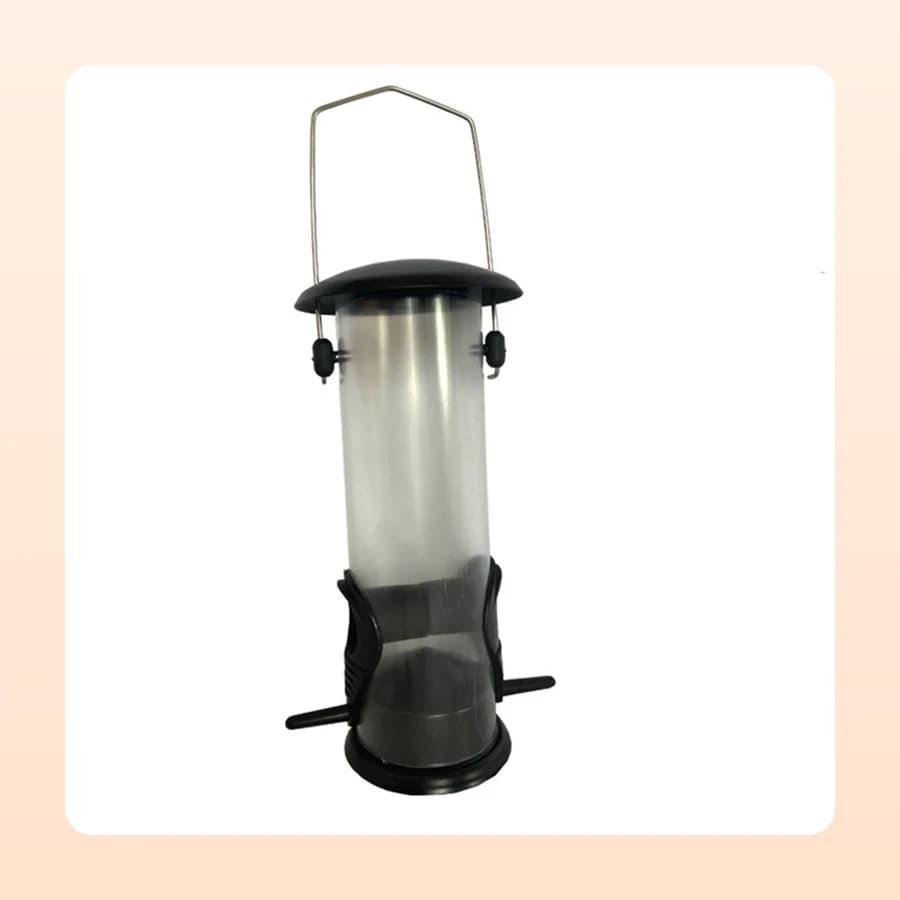
The bird eats inside the box, so the husk stays inside the box.
The bird eats inside the box, so the husks it flicks land inside the box. This reduces mess at the source rather than catching it after it has already left the cage.
£14.99
Taxes calculated at checkout
Clear on all four sides, so you can see the seed and the bird
Perch rod across the opening to land on
Small 11 x 13 x 13 cm, medium 16 x 16 x 16 cm
3 mm acrylic, two wire hooks on top
Lifts off the bars for cleaning
Size: Small
1
Free shipping over £45
Free 30 day returns
Secure checkout
Why you'll love it
Made for happy, healthy pets
Scatter is contained rather than reduced
A hood or a guard cuts the mess down. A box the bird stands inside stops most of it, because everything flicked sideways hits a wall. It is the difference between sweeping weekly and sweeping daily.
Sizing is about the bird turning round
Small suits budgies, lovebirds and cockatiels. Medium suits conures and caiques. If a bird cannot turn inside it without folding its tail, it will feed from the doorway and you lose the point of the box.
Clear plastic shows what is really left
Seed hulls sit on top and look like food. Through a clear side you can see the actual depth, which is the single most common way a caged bird ends up short.
Good fit if
Rooms where seed mess is a constant argument
Carpeted floors, where husks work into the pile
Cutting mess at source rather than catching it
Birds confident enough to enter an enclosed space
Look elsewhere if
Your bird is nervous of enclosed spaces
You have several birds and only one box
You need something quick to refill through the bars
Containing the flick
A seed eating bird cracks a shell, takes the kernel and flicks the husk aside, hundreds of times a day. From an open dish those husks leave the cage between the bars and travel a surprising distance, which is why the area round a cage needs daily attention.
An enclosed box changes the geometry. The bird's head is inside a housing when it flicks, so the husk hits the wall of the box and drops. What escapes is a fraction of what an open dish releases, and unlike a cage skirt it prevents the mess rather than intercepting it.
Introducing it
Birds are naturally cautious about entering enclosed spaces, and a box that appears overnight with all the food in it is a box a nervous bird may not enter. That is a genuine welfare risk rather than an inconvenience, since a bird can go without food for far less time than a mammal.
Introduce it gradually. Fit it with the existing dish still in place and food in both, so the bird can choose. Once you see it feeding inside the box regularly, reduce what is in the open dish over several days. Never remove the familiar option until you have watched the bird use the new one.
Multiple birds
An enclosed feeder is easy for a dominant bird to guard, because it is a single defensible entrance rather than an open dish anyone can approach. In a cage with more than one bird that can leave a subordinate genuinely short of food, and it is difficult to spot.
The answer is two feeding stations at opposite ends of the cage rather than one. That removes the value of guarding, since a bird cannot hold both, and it is worth doing even with birds that appear to get along, since feeding conflict is often subtle enough to go unnoticed.
In the box
Everything you need
1 acrylic feed box with two hooks and a perch rod
How it works
Simple, from basket to doorstep
1
Browse
Shop by pet or category to find exactly what your cat or dog needs, no wading through thousands of listings.
2
Order
Check out securely with card, PayPal or one tap Apple Pay & Google Pay. Free delivery over £45.
3
Delivered
Fast, tracked dispatch straight to your door, and a happier pet before you know it.
The details
Specifications
Small
11 x 13 x 13 cm, 423 g
Medium
16 x 16 x 16 cm, 680 g
Material
3 mm clear acrylic
Fitting
Two wire hooks over the cage bars
Care
Rinse in warm water, no solvents
Size guide
Size
Dimensions
Suits
Small
11 × 13 × 13 cm
Budgies, finches and canaries
Medium
16 × 16 × 16 cm
Cockatiels and small parrots
The bird must be able to enter, turn and eat without its tail pressing against the opening. If in doubt take the larger size, since a box that feels tight is one a cautious bird will refuse to use.
Cleaning acrylic
Empty it weekly rather than topping it up, since the husks and dust that collect inside are exactly what you were trying to contain. Wash with warm water and a soft cloth, and dry it before refilling, because damp seed clumps against the walls and blocks the opening.
Acrylic scratches easily and a scratched panel goes cloudy, which defeats the point of being able to see in. Never use an abrasive cloth or a scouring pad, and avoid alcohol based cleaners, which craze the surface. Warm water and a microfibre cloth is genuinely all it needs.
Loved by real pet parents
4.5· 10 reviews
Pair of budgies
Sweeping weekly instead of daily
She steps right inside to eat and everything she flicks hits an acrylic wall and drops back into the seed. The floor around the cage has gone from a daily job to a weekly one. I bought the small at 11 by 13 and she turns round in it easily.
Gail W.· Germany· 1 October 2025
Heavier on the bars than I expected
The small one is over 400 g before you put any seed in it, so on a lightweight cage you do notice it pulling on the bars. Mine is a solid cage and it is fine, but check yours first. The box itself is excellent and the perch rod sits at a sensible height.
Ahmed S.· United Kingdom· 22 February 2026
I can see what is left
Through the clear sides you can see the actual seed depth rather than a layer of hulls sitting on top, which is how I used to get caught out. It takes two seconds to check on the way past. The 3 mm acrylic feels sturdy and has not flexed anywhere.
Della R.· Italy· 13 July 2026
Sun conure
Medium suits the conure
I went for the 16 by 16 medium because he needs room to turn without folding his tail and it was the right call. He stands inside and works through it with barely anything ending up outside the box. It lifts off the two hooks for a rinse in about a second.
Niall C.· Germany· 3 August 2025
Cockatiel
Ours feeds from the doorway
The box is well made and the acrylic is properly clear, no complaint on the quality at all. Our cockatiel will not commit to stepping inside and stands on the perch rod reaching in, so half the scatter still lands outside. That is probably the bird rather than the box but it has not solved what I bought it for.
Wendy T.· Germany· 27 March 2026
Pair of cockatiels
The perch rod was the clever bit
The rod across the opening gives her somewhere to land before she steps in, and she uses it every single time rather than clattering straight into the seed. The hooks sit over the bars and hold steady even when she lands hard. A warm water rinse and it comes up clear again.
Jonathan A.· United Kingdom· 5 June 2026
Lovebird pair
Scratches if you use the wrong cloth
I used a sponge with a scouring side on it once and left fine marks across the front panel, entirely my fault as the care note says warm water and no solvents. Still see through, just not quite as crisp as it was. It has cut the mess down more than any guard I have tried.
Rhiannon E.· United Kingdom· 1 December 2025
Two hooks hold it dead level
Both wire hooks go over the same bar and the box sits square rather than tilting, which was my worry with something this size. The small version fits through our cage door so it comes out without dismantling anything. Husk stays behind the acrylic where it belongs.
Terence K.· Ireland· 25 August 2026
Senior budgie
Bought a second for the soft food
One holds the daily seed and the second holds the softer bits, and both hang on the same side of the cage. Being able to see through all four sides means I can tell which one he has actually been into. Cleaning is a lift, a rinse and back on the hooks.
Priyanka D.· United Kingdom· 6 January 2026
Loading
Good questions
Before you buy
The supplier makes a 21 cm cube. Shipped, it is charged on 1.85 kg of volume against under a kilo of actual weight, and the landed cost stops making sense. We carry the two sizes that post sensibly.
Most do within a day or two, especially if it is the only feeder. If yours hesitates, leave the old dish alongside for a week and then take it away.
Yes, and beaks will mark it. It stays functional; it does not stay showroom clear. Wash it in warm water only, because solvent cleaners craze acrylic.
Most will, given time. Fit it alongside the existing dish with food in both, and only reduce the open dish once you have watched the bird feed inside the box on several occasions.
Not all, but far more than a cage skirt does, because it prevents the husks leaving rather than catching them afterwards. Using both together is the most effective combination.
Warm water and a soft microfibre cloth. Avoid abrasive pads and alcohol based cleaners, both of which scratch or craze acrylic and leave it permanently cloudy.
Most pet birds are fed a diet that shortens their lives, and it's the one sold in every pet shop. Here's what to feed instead, and how to make the switch.