One handle and five heads that swap in seconds. The practical benefit is that the whole weekly aquarium routine happens without your arm going into the water once.
£8.99
Taxes calculated at checkout
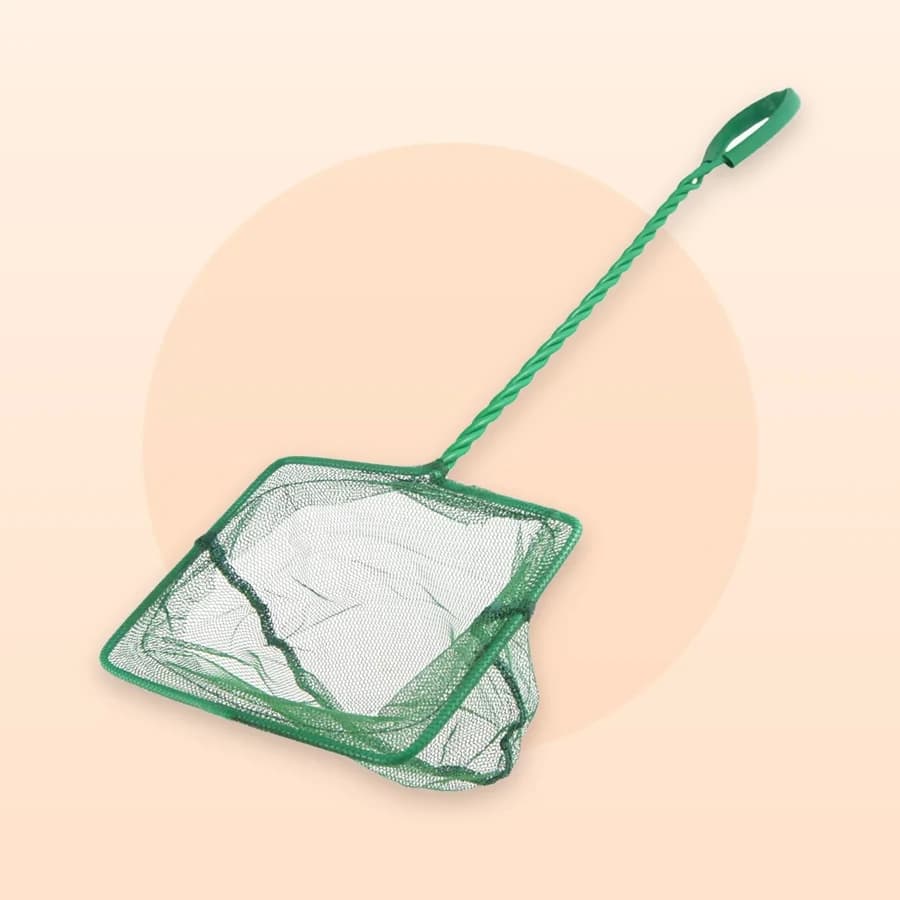
Fish net, scraper, sponge, plant fork and rake
One 49 cm rod, heads swap in seconds
Stainless steel blade on the scraper
Rotating head reaches into corners
Assembles direct or through the connector
1
Free shipping over £45
Free 30 day returns
Secure checkout
Why you'll love it
Made for happy, healthy pets
Five tools for the price of one
Bought separately these are five purchases and five things to lose in a cupboard. One rod and a set of heads is the reason this outsells the individual tools.
Hands out of the water
Every time you put an arm in you carry in soap, hand cream and whatever else. A 49 cm handle keeps all of that out of a system where small doses matter.
The plant fork is the one you did not know you needed
Planting or re planting a stem by hand means burying your arm and clouding the tank. The fork pushes a root down through the substrate without disturbing the rest.
Good fit if
Setting up a first tank, where you need everything at once
Planted tanks, thanks to the plant fork
Anyone who dislikes reaching into the water
Keeping one set of tools rather than five separate ones
Look elsewhere if
You have a very deep tank, since the rod is 49 cm
You have an acrylic tank and would use the steel scraper
You already own good individual tools
Why keeping your arm out matters
It is not only about staying dry. Skin carries oils, soap residue and hand cream, all of which end up in the water, and in a small tank that is a meaningful addition. Anyone who has used a hand sanitiser recently should certainly not be putting their arm in an aquarium.
There is also the disturbance. An arm in the water displaces a surprising volume, stirs the substrate and frightens the fish more than a thin rod does. Tools on a handle let you work precisely in one area without unsettling the whole tank.
What each head is for
The scraper handles algae on glass, the sponge clears the film behind it, and the rake lifts detritus out of the substrate surface. The plant fork is the one people overlook: planting a stem into gravel by hand almost always leaves it floating an hour later, and a fork pushes the root down and holds it while the substrate closes around it.
The net is best treated as a spare rather than a primary. It suits scooping leaves and uneaten food off the surface; for catching fish, a dedicated soft fine mesh net is kinder, since coarse netting on a rigid rod is not what you want near a betta's fins.
Reach and assembly
Forty nine centimetres covers most standard tanks up to about forty centimetres deep, allowing for the rim you reach over. In a taller display tank you will still be leaning in, and a longer dedicated tool is the better answer rather than fighting a rod that is slightly short.
The heads assemble directly onto the rod or through the connector, and the rotating head is what lets you angle a scraper into a corner rather than approaching everything square on. Check each head is fully seated before it goes in the water, since a head that comes off mid clean has to be fished out.
In the box
Everything you need
49 cm rod
Connector
Fish net
Algae scraper
Cleaning sponge
Plant fork
Gravel rake
How it works
Simple, from basket to doorstep
1
Browse
Shop by pet or category to find exactly what your cat or dog needs, no wading through thousands of listings.
2
Order
Check out securely with card, PayPal or one tap Apple Pay & Google Pay. Free delivery over £45.
3
Delivered
Fast, tracked dispatch straight to your door, and a happier pet before you know it.
The details
Specifications
Rod length
49 cm
Heads
Net, scraper, sponge, plant fork, gravel rake
Scraper
Stainless steel blade
Material
Plastic and stainless steel
Weight
About 200 g
Rinsing and drying
Rinse every head in clean water after use and let them dry before storing. The sponge is the one that matters most, since a damp sponge in a closed box goes stale within days and then carries that straight back into your tank.
Check the steel blade for corrosion where it meets the plastic, and keep the whole kit for aquarium use only. Household cleaning residue on a tool is a genuine risk to fish, and there is no way to be sure a rinse has removed it.
Loved by real pet parents
4.5· 13 reviews
Tropical community tank
Heads swap fast, connector is fiddly
Changing from the scraper to the sponge takes seconds once you know the knack, and having five heads on one 49cm rod means my whole weekly routine is one thing out of the cupboard. Fitting the connector in between is the fiddly part and I have dropped it in the tank twice. Everything else is exactly as described.
Bernadette H.· Denmark· 28 March 2026
Arm stays out of the water
49cm sounds like a lot until you try to reach the back of a tall tank. I can scrape the far glass and rake the gravel without putting a hand in, which means no soap or hand cream going into the water. That alone was worth it.
Tom G.· Canada· 6 October 2025
Planted tank
The plant fork is the surprise
I expected to use the net and the scraper and ignore the rest. In practice the plant fork gets the most use, because I can push a stem back into the substrate without burying my arm and clouding the whole tank for an hour. Replanting is a two minute job now.
Ayesha M.· Germany· 22 June 2026
Cold water tank
Good idea, sponge head loosened
The rod and the scraper are solid and I have no complaint there. The sponge head worked itself loose twice in the middle of a clean and floated off, which meant rolling my sleeve up after all. Perhaps I am not tightening it enough, but it is the one head I do not trust.
Ruaridh S.· Italy· 23 August 2025
Rotating head gets the corners
Corners are where the green film always starts in our tank and a fixed scraper simply cannot get in there. Turning the head round means I can work the corner seam properly, and the glass now looks clean rather than clean in the middle.
Janice W.· United Kingdom· 24 January 2026
Tropical tank
Steel blade lifted hard spots
The stubborn green dots on the front pane had beaten an old bank card and a sponge. The stainless blade took them off in one pass without marking the glass. I keep the soft sponge head on for the weekly wipe and only bring the blade out monthly.
Felix D.· United States· 16 December 2025
First aquarium
Rod is light, almost too light
Two hundred grams means no ache in your wrist, which is genuinely welcome. It also means the rod flexes a little when you press hard with the scraper, so I have learned to use more passes rather than more force. Not a fault, just how it feels in use.
Carol P.· United States· 7 August 2026
Five things, one cupboard space
Previously I had a net in one drawer, a scraper behind the tank and a rake I could never find. Now it is one rod and the heads in the cabinet under the tank. The gravel rake is better than I expected at stirring debris up so the filter takes it.
Nathan I.· Ireland· 30 April 2026
Community tank
Weekly routine is now one job
Sunday morning is net out the floating bits, scrape the front, wipe with the sponge, rake the gravel. Same rod throughout, about fifteen minutes, and the water is clear again by the evening. I did not expect that much difference from simply having the tools together.
Stephen K.· United States· 9 July 2025
Loading
Good questions
Before you buy
Yes, keep the steel blade for glass only. On acrylic use the sponge head, which will not scratch.
It comfortably works a standard 60 cm tank. For a tall or very deep tank you will still be reaching, so check your depth before ordering.
They lock into the connector rather than pushing on friction fit. Seat each one until it clicks before you put weight on it.
Yes, permanently. Use the sponge head on acrylic tanks, and on glass keep the blade a few centimetres away from the silicone seams.
For most tanks up to about 40 cm deep, allowing for the rim. Taller display tanks need a longer dedicated tool if you want to avoid leaning in.
They do when fully seated. Check each one is properly home before it goes in the water, since retrieving a detached head from the substrate is more trouble than the check.